
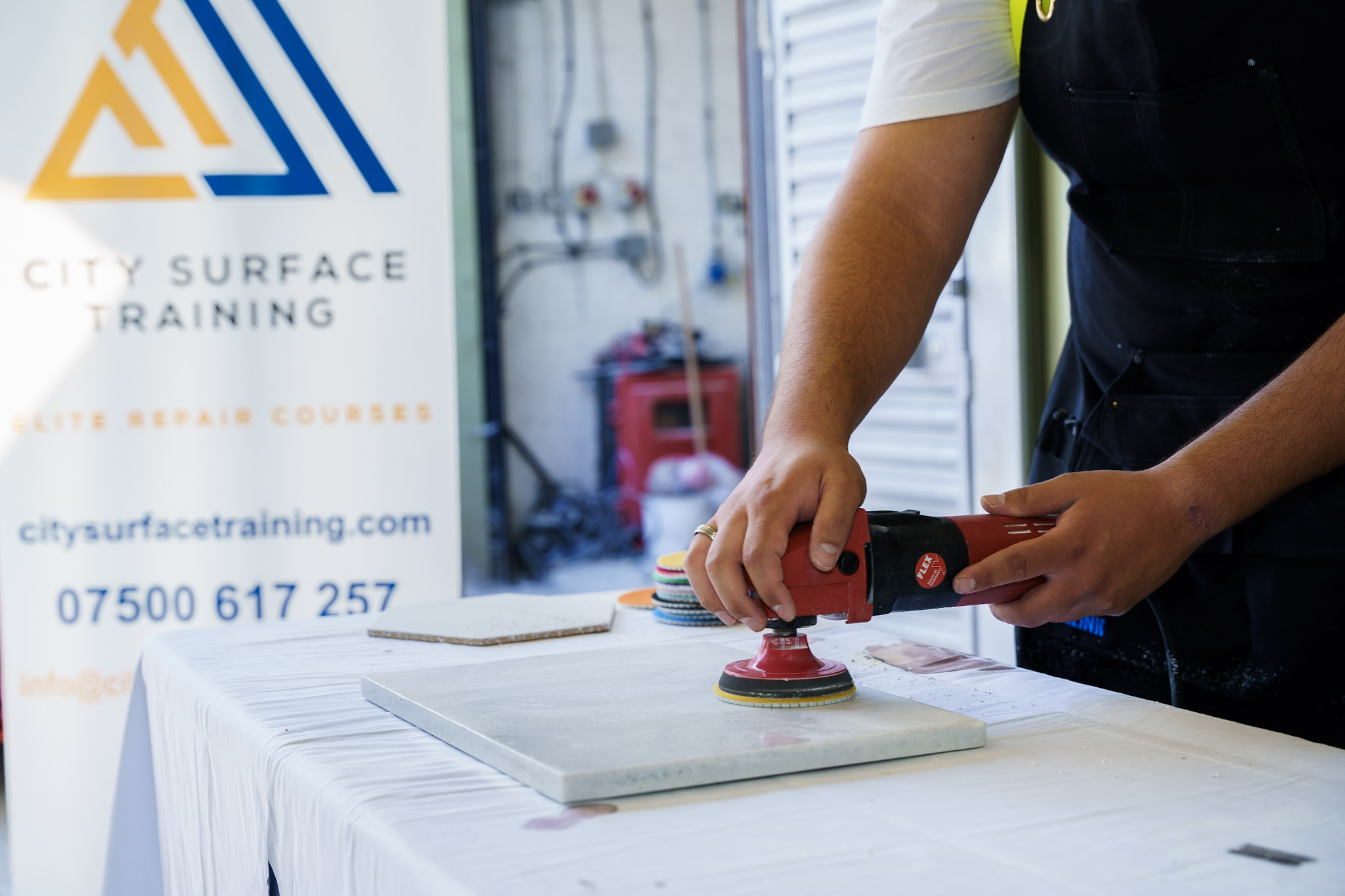
What does a surface repair technician do?
A surface repair technician restores cosmetic damage without replacing the whole item. Typical work includes rebuilding chips, removing scratches, matching colours, recreating texture and blending a finish into the surrounding area. The aim is a durable repair that is difficult to detect in normal viewing conditions.
Work is often completed at the customer’s property or on a construction site. You might repair a worktop in a new-build kitchen, a bath in a hotel, a window frame before handover, or brickwork that has been chipped during other building work. The job combines practical skill with careful assessment: not every defect is cosmetic, and not every item is suitable for repair.
Common materials and jobs
- Wood, laminate, veneer, flooring, doors and furniture
- UPVC, aluminium, powder-coated frames and metal panels
- Baths, shower trays, tiles, stone and engineered worktops
- Glass scratch removal, brick repair and French polishing, which require specialist techniques
The skills that matter most
Beginners often focus on fillers and coatings, but experienced technicians know that the final result depends on the whole process. A strong course should give you supervised practice in each of the following areas.
1. Assessment and preparation
Learn to identify the material, coating and extent of the damage before choosing a method. Cleaning, abrasion, filling, profiling and masking affect adhesion and the final appearance. Rushing preparation is a common reason a repair fails or remains visible.
2. Colour matching and blending
Colour matching means more than choosing a similar paint. You need to control hue, depth, sheen and opacity, then check the result under appropriate lighting. Blending carries the repair into the surrounding finish so the eye does not stop at its edge.
3. Texture and finishing
A smooth colour patch can still stand out on woodgrain, stone or textured UPVC. Practice recreating texture, brush detailing, airbrushing, spraying, polishing and sheen adjustment on sample pieces before accepting customer work.
4. Customer and site skills
Good technicians explain what can be repaired, agree the expected result, protect nearby surfaces and leave a clean workspace. Clear photographs, written quotes and realistic expectations prevent many disputes.
A practical route into surface repair
Step 1: Choose broad training before specialising
If you are new to the trade, broad hard-surface training gives you a foundation across materials and repair methods. You can then add specialist glass, stone or French polishing skills according to the work available in your area. Our guide to surface repair technician courses explains what to compare.
Step 2: Keep a sample board portfolio
Prepare damaged sample tiles and repair them under different conditions. Photograph each one before work starts, during preparation and after finishing. Include close-ups and wider views. A consistent portfolio is more useful to a prospective customer than a list of techniques you have only watched.
Step 3: Build a controlled toolkit
Start with the products and equipment you have been trained to use. Know the purpose, compatibility, curing requirements and shelf life of each material. Buying every available gadget will not compensate for limited practice.
Step 4: Start with supervised or lower-risk work
Early jobs should match your current ability. A small laminate chip is very different from damage across a highly visible patterned stone worktop. When a job exceeds your experience, say so and use your post-training support or refer it to a specialist.
Step 5: Set up the business basics
Before trading, research suitable insurance, written terms, record keeping, waste handling and tax responsibilities. Requirements depend on how and where you work. Site contractors may also require specific inductions, documents or safety certifications.
Tools, products and safe working
A toolkit commonly includes abrasives, fillers, application tools, colourants, detail brushes, an airbrush or spray equipment, polishing equipment, masking supplies and appropriate cleaning products. The exact list varies by material and repair system.
Safety comes before speed. Read product safety data sheets, assess ventilation, use the specified protective equipment and follow the manufacturer’s instructions. Construction sites may have additional controls. The UK Health and Safety Executive provides an introduction to COSHH and hazardous substances.
Test products on sample material rather than experimenting on a customer’s property. Some coatings, substrates and existing finishes react differently, so compatibility testing belongs in your workflow.
How to find your first surface repair work
Potential customers include builders, kitchen and bathroom installers, property managers, letting agents, hotels, facilities teams and homeowners. A focused approach is usually more effective than advertising every service to everyone.
- Create a simple service list covering the repairs you can perform confidently.
- Show genuine before-and-after photographs with the material and damage described.
- Contact local contractors who regularly need cosmetic defects resolved before handover.
- Agree call-out, minimum-charge and quotation rules before travelling.
- Ask satisfied trade customers whether they can introduce you to another project manager or site contact.
Price for assessment, travel, preparation, materials, repair time and finishing—not just the minutes spent applying colour. For help understanding revenue and expenses, read our UK surface repair technician salary and day-rate guide.
Common questions about entering the trade
Do I need previous construction experience?
Previous experience can help with site awareness and material knowledge, but it is not a substitute for guided repair practice. Beginners should look for small-group, hands-on tuition and support after the course.
Can I learn everything in five days?
An intensive course can teach processes and give you a practical foundation, but proficiency develops through repeated work on varied damage and materials. Keep sample boards, review difficult repairs and use specialist support when needed.
Is surface repair the same as resurfacing?
Not always. Local cosmetic repair treats a defined damaged area, while resurfacing normally coats a larger area or the whole item. Assessment determines which approach is appropriate.
What should I do after training?
Choose a small set of repairs to master, prepare portfolio samples, organise insurance and safe-working documents, then approach local trade customers with a clear offer. Do not promise invisible or structural results you cannot reliably deliver.