What should a surface repair technician course teach?
A useful surface repair technician course should teach a repeatable process, not a collection of demonstrations. You should leave understanding how to assess damage, prepare the surface, select compatible materials, rebuild the profile, match colour and texture, apply a finish and check the result.
The words “surface repair” cover several materials and techniques. Before booking, match the syllabus to the work you intend to do. Broad hard-surface training suits many beginners; glass polishing, stone restoration and French polishing are more specialised routes.
Look for supervised practical work
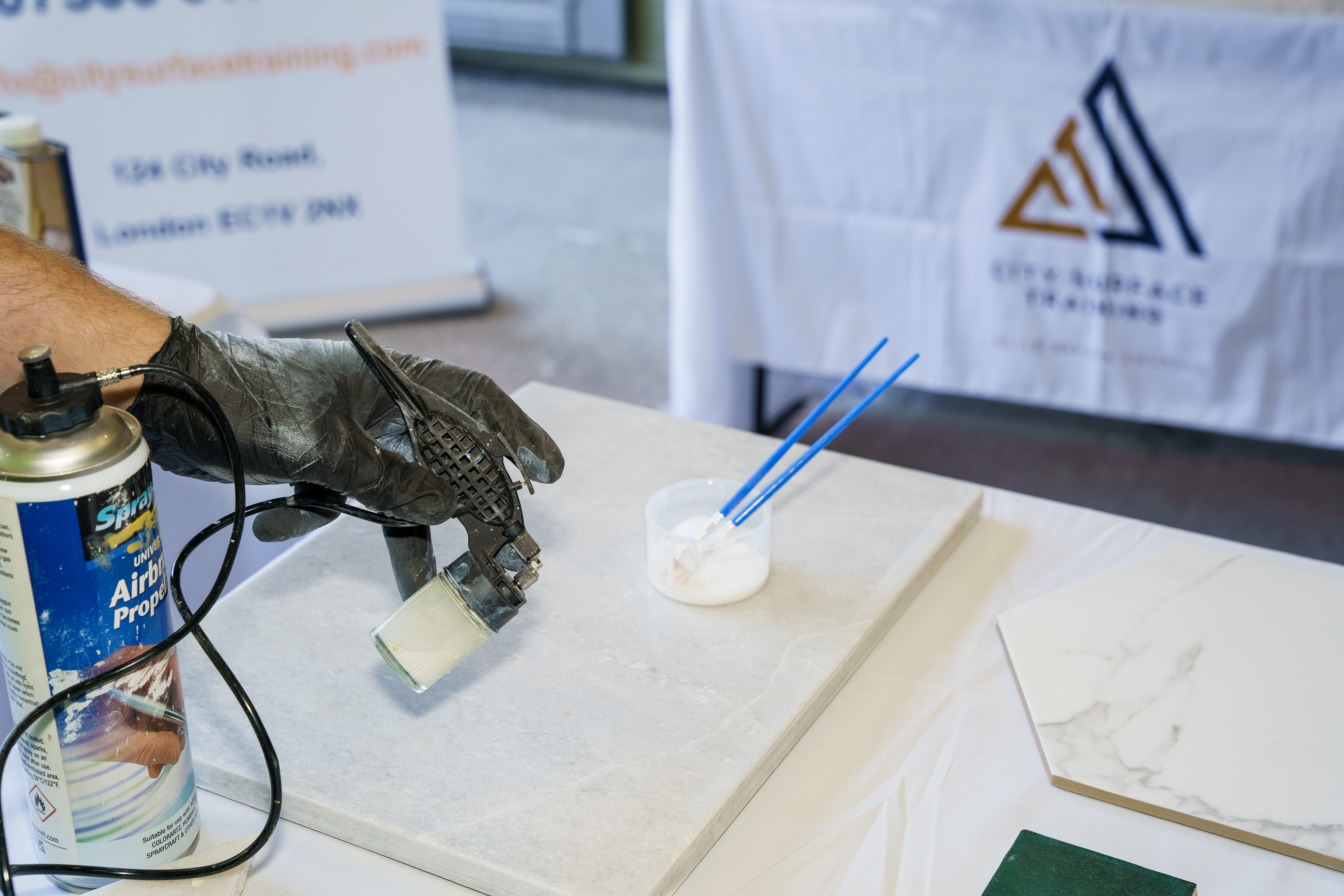
Watching an instructor complete a perfect repair is helpful, but it does not show whether you can repeat the process. Ask how much time each student spends filling, sanding, mixing colours, detailing, spraying and polishing. Small classes can make individual feedback easier to provide.
Check whether business skills are included
Technical ability is only one part of paid work. A rounded course should discuss assessment, quotations, customer expectations, photographs, pricing and when to decline a job. Ongoing support is valuable when you encounter a material or defect that was not covered by your sample exercises.
How to compare surface repair courses
| What to compare | What a useful answer sounds like |
|---|---|
| Practical time | Which repairs you will complete personally, on which materials, and how much supervision is provided. |
| Class size | The maximum number of students per instructor, rather than the size of the venue. |
| Materials covered | A clear list such as wood, laminate, UPVC, metal, baths, tiles, glass or stone. |
| Tools and consumables | What is supplied during training and what you must buy afterwards. |
| Assessment | How the instructor checks your repair and gives corrective feedback. |
| After-course support | How long support lasts, how to request it and whether it covers technical questions on real jobs. |
| Total price | Tuition, VAT, kit, travel, accommodation and any assessment or certificate charges. |
Compare our 5-day surface repair courses
City Surface Training offers four 5-day intensive routes at £2,950 each. Course pages list all tools and materials as included, a maximum class size of eight students and six months of post-course support. Check the current terms and availability before booking.
| Course | Best suited to | Details |
|---|---|---|
| Surface Repair Technician | A broad foundation across common surface damage and professional repair techniques. | View surface repair course |
| Glass Repair Specialist | Technicians wanting focused scratched-glass repair and restoration skills. | View glass repair course |
| French Polishing Mastery | Traditional timber finishing, furniture restoration and high-end woodwork. | View French polishing course |
| Stone Cleaning & Restoration | Cleaning and restoring stone on heritage and modern buildings. | View stone restoration course |
If your goal is general repair work, start with the broad course and add a specialism later. If you already have a trade or customer base, a specialist course may be the more direct choice. Our guide to becoming a surface repair technician explains a practical route into the industry.
What does a surface repair course really cost?
The advertised tuition fee is only one part of the investment. Compare the total amount needed to begin working safely and confidently. A cheaper course can cost more overall if you must immediately purchase basic consumables or arrange further one-to-one tuition.
- Tuition and VAT: confirm whether the displayed figure includes VAT.
- Equipment: establish which tools are for use during the course and which you take away.
- Travel and accommodation: include the full cost of attending an intensive course away from home.
- Practice materials: budget for sample boards and repeat exercises after training.
- Business setup: consider insurance, vehicle costs, safety equipment, website or marketing expenses.
The best-value course is the one that helps you perform repeatable repairs to a professional standard—not simply the one with the longest syllabus.
Questions to ask before booking
- How many students will be in my group, and how many instructors will be present?
- Which repairs will I complete from start to finish?
- Will I work on real damaged items, prepared samples, or both?
- What tools and materials are included in the fee?
- What happens if I need help on a job after the course?
- Does the certificate confirm attendance, practical assessment, or both?
- What are the rescheduling, cancellation and refund terms?
Common course questions
Is a longer course always better?
No. Duration matters, but the amount of supervised practice and quality of feedback matter more. Ask for a day-by-day breakdown and compare it with your learning goals.
Should beginners choose a specialist course?
Usually, a broad repair course provides more flexibility. Specialist training makes sense when you already know the type of work you want or are adding a service to an existing trade.
Does a certificate guarantee work?
No training provider can guarantee customers or income. Your portfolio, reliability, practical ability, pricing and local contacts all influence whether you find work.
What should I do immediately after the course?
Repeat the core exercises, photograph your results and organise a controlled toolkit before taking on complex customer work. Use the support period to ask specific technical questions.